
Filament Storage for PLA
Last reviewed
Current offers
In-stock storage boxes, vacuum bags and desiccant with a price verified in the last 24 hours.

Plan capacity before picking a product
The most common storage mistake is buying for today's spool count. Start with a quick inventory and split it into two groups, because each group suits a different product.
- Active spools: the colors you print from in a typical week. These need a container you can open often, ideally one that feeds the printer directly.
- Reserve spools: opened spools you return to occasionally, plus anything waiting in its factory bag. These suit dense, rarely opened storage such as vacuum bags or a large tub.
Then add headroom. If you buy multipacks or bulk PLA, your reserve can jump by four or ten spools in one order. A useful rule is to size active storage for your current colors plus one, and reserve storage for your largest typical order. Spool format matters as well: Polymaker rates its PolyBox for two 1kg spools or one 3kg spool (opens in a new tab), which shows how a single large reel can fill a box meant for two.
Dry boxes: features that separate good from poor
A dry box is an airtight container sized around spools. When comparing listings, look at these points in order of importance.
- The seal. A continuous gasket in the lid and latches that press it down evenly matter more than anything else. A box that lets humid air in will exhaust its desiccant quickly no matter how much you add.
- Internal size. Check the inside width and height against your spools' outer diameter and width. Cardboard and plastic reels from different brands are not the same size.
- Spool support. Rollers or an axle let the spool turn if you feed from the box. For pure storage, a flat floor is fine and fits more.
- A feed outlet. A sealed PTFE fitting lets you print without opening the lid. Prusa's advice for its own drybox is to keep the tube cut to length without much slack (opens in a new tab), since excess tube adds drag.
- Room for desiccant. A tray or compartment keeps loose beads away from the spool and makes swapping them easy.
- A window or hygrometer slot. Seeing the indicator without opening the lid avoids letting humid air in just to check.
Remember the limit of any box: Prusa states that the Drybox does not dry filament (opens in a new tab). A spool that is already damp needs a filament dryer before it goes in.
Vacuum bags: dense storage for reserve spools
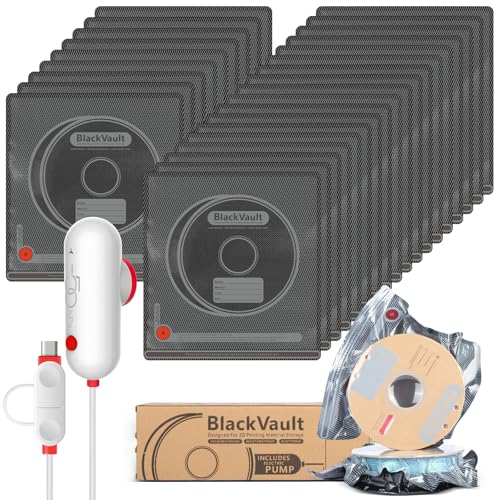
Vacuum bags pack reserve spools tightly and keep them sealed for weeks. Compare them on a few points: a one-way valve rather than a press-to-close zip alone, bag size that fits a 1kg spool with room to fold the top, thicker film that resists punctures from spool edges, and the pump type. Hand pumps are cheap and quiet; small electric pumps are faster if you seal many bags.
Prusa recommends keeping desiccant inside vacuum bags (opens in a new tab), not relying on the vacuum alone, so check that a kit includes desiccant packs or budget for them. Bags work poorly for active spools, because every reopening means pumping again. Many spools arrive sealed with desiccant from the factory; keep those unopened until they are next in line and the bag you buy only needs to handle opened spools.
Desiccant: choosing the type
| Type | How it shows it is spent | Regenerating it | Good fit |
|---|---|---|---|
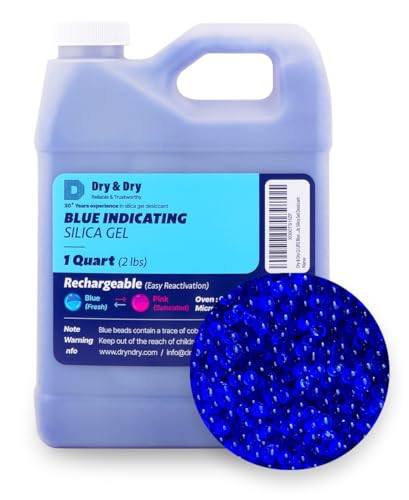
| Indicating silica gel beads | Beads change color | Gentle oven or microwave heat per the pack's instructions | Dry boxes where you can see the beads |
| Plain silica gel packs | No visual change | Same as above, but timing is guesswork | Vacuum bags, paired with an indicator card |
| Molecular sieve | Usually none on its own | Needs higher heat than silica gel; follow the maker | Holding air very dry in small sealed spaces |
| Clay packs | No visual change | Varies by product | Low-cost bulk use in large tubs |
For an example of regeneration instructions from a filament maker, Polymaker says the silica gel in its PolyDryer turns orange when dry and dark green when wet (opens in a new tab) and can be regenerated in an oven at 100 to 120°C for 1 to 2 hours, among other methods. Do not apply those numbers to a different product without checking its own label, since temperatures differ by desiccant type and pack material. Reusable desiccant also wears out eventually; Polymaker says the PolyBox desiccant bags can be reused 4 to 5 times.
Two buying tips apply to any type. Prefer refillable canisters or trays over single-use sachets if you run several boxes. And buy more desiccant than the box seems to need, so a fresh set can go in while the spent set regenerates.
Indicators: how you know storage is working
You need some way to see the humidity inside, and there are three levels of detail.
- Indicator beads show only "still working" or "spent".
- Humidity indicator cards show printed spots that change color at set humidity levels, which suits vacuum bags where a meter would not fit.
- Small digital hygrometers give a number you can compare with Prusa's PLA target of below 30% relative humidity.
Treat hygrometer readings as approximate. Prusa lists its own unit's accuracy as plus or minus 3% RH and notes the reading can take up to an hour to settle. A cheap meter is still worth having: a reading that climbs steadily within a day of sealing points to a leaking lid, not a desiccant problem.
Where the grid fits
The grid on this page lists storage products currently in stock, each with the time its price was checked against Amazon; after 24 hours the price is replaced by "Check price at Amazon". For the habits that make any container work, such as when to reseal, labeling spools and where to keep boxes, read how to store PLA filament.
Frequently asked questions
How many spools should one dry box hold?
As many as you print from in a typical week, plus one. Keeping active spools together means you open fewer boxes, and each opening lets in room air.
Are vacuum bags better than a dry box?
They suit different jobs. Vacuum bags pack reserve spools densely and stay sealed for weeks, while a dry box is easier to open daily and can feed the printer directly. Many people use both.
Is indicating silica gel worth the extra cost?
Usually yes for dry boxes, because you can see when it needs regenerating without a meter. In vacuum bags, plain packs plus an indicator card work just as well.
Can I store PLA and PETG in the same box?
Yes, but plan for the stricter material. Prusa's target for PETG is below 20% relative humidity, lower than its PLA target, so a shared box needs to hold the PETG figure.
Product prices and availability are accurate as of the date/time indicated and are subject to change. Any price and availability information displayed on Amazon at the time of purchase will apply to the purchase of this product.