
Anycubic Hardened Nozzle 0.4mm
- Nozzle
- Hardened steel
Listed for Kobra X, Kobra 4
$14.19
Verified
Last reviewed
In-stock nozzles; each card says which printers its maker lists it for. Nozzles are printer-specific.
Listed for Kobra X, Kobra 4
$14.19
Verified

Listed for P1S, P1P
$49.99
Verified

Listed for K1, K1 Max, K1 SE, Ender 3 V3, Ender 3 V3 Plus, K2 SE
$19.99
Verified

Listed for K1C
$19.99
Verified

Listed for K2 Plus
$63.99
Verified

Listed for K2, K2 Pro, K2 Plus
$34.39
Verified
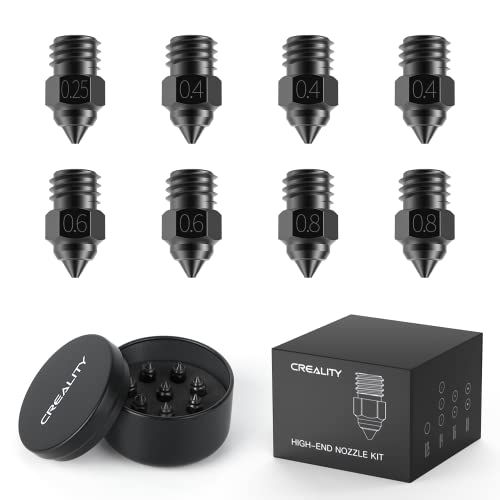
Listed for Ender 3, Ender 3 V2, Ender 3 Pro, Ender 5
$28.99
Verified

Listed for Centauri, Centauri Carbon
$19.99
Verified
Listed for Centauri, Centauri Carbon
$19.99
Verified

Listed for Neptune 3, Neptune 3 Pro, Neptune 3 Plus, Neptune 3 Max
$9.99
Verified

Listed for Neptune 4 Plus, Neptune 4 Max
$9.99
Verified

Listed for AD5X
$29.00
Verified

Listed for AD5X
$25.00
Verified

Listed for Adventurer 5M, Adventurer 5M Pro
$39.00
Verified

Listed for Creator 5, Creator 5 Pro
$35.00
Verified

Listed for Plus5
$39.99
Verified

Listed for Q2, Plus5, Q2C
$29.99
Verified

Listed for SV06 ACE, SV06 Plus ACE
$19.99
Verified
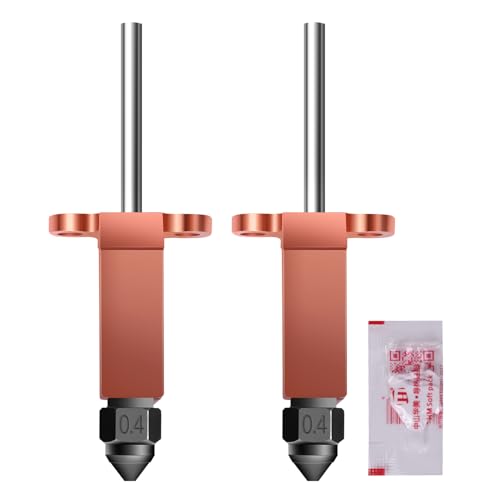
Listed for SV08, T300
$22.99
Verified

Listed for SV06 Plus, SV07, SV07 Plus
$19.99
Verified

Listed for SV08 MAX
$20.99
Verified

Listed for Adventurer 5M, Adventurer 5M Pro
$19.99
Verified

Listed for MK4, MK4S, XL, Core One
$64.99
Verified

Listed for V6 hotend
$21.99
Verified
Ordinary PLA does not. It contains no hard particles, and brass handles it comfortably. The answer changes with filled blends. Carbon fiber and glass fiber PLA carry short reinforcing fibers, glow-in-the-dark PLA carries phosphorescent particles, and metal or wood filled PLA carries powder or fibers of its own. These wear the bore of a soft nozzle, widening it until extrusion becomes inconsistent. Prusa describes the effect simply: with abrasive filaments, the brass nozzle tends to wear too quickly (opens in a new tab).
Some blends sit in between. Polymaker says its Panchroma Matte PLA is slightly more abrasive than regular PLA (opens in a new tab), though not enough to justify a hardened nozzle, adding that heavy users may want one for longevity. When a filament page is unclear, Prusa's advice is to ask the filament vendor.
Check your own printer's nozzle and material list before buying anything. The manufacturer data pla.deals uses for compatibility shows how much this varies, even within one brand:
| Printer | Stock nozzle | What the maker says about filled filament |
|---|---|---|
| Bambu Lab A1 (opens in a new tab) and A1 mini (opens in a new tab) | Stainless steel 0.4mm; 0.2, 0.6 and 0.8mm optional | Carbon or glass fiber reinforced listed as not recommended |
| Bambu Lab P1S (opens in a new tab) | Stainless steel 0.4mm; 0.2, 0.6 and 0.8mm optional | Carbon or glass fiber reinforced listed as not recommended |
| Bambu Lab H2D (opens in a new tab) | Hardened steel 0.4mm | Lists carbon and glass fiber reinforced PLA |
| Creality K1 (opens in a new tab) | Hardened steel 0.4mm | Lists PLA-CF and PA-CF |
| Creality K1C (opens in a new tab) | Hardened steel 0.4mm, quick-swap tri-metal | Lists PLA-CF and PA-CF |
| Creality Ender-3 V3 (opens in a new tab) | Hardened steel 0.4mm | Lists PLA-CF and PETG-CF |
| Creality Ender-3 V3 KE (opens in a new tab) | Brass 0.4mm | No filled filament in its list |
| Creality Ender-3 V3 SE (opens in a new tab) | Brass 0.4mm | No filled filament in its list |
The compatibility checks on the site follow these published lists. On the A1, A1 mini and P1S, pla.deals marks carbon fiber and other filled PLA, glow included, as not recommended. On brass-nozzle printers with no documented hardened option, such as the Ender-3 V3 KE, filled PLA is also marked not recommended. If you own a printer that ships hardened, you already have the right material and only need spares. Model-specific notes are on best PLA for the Bambu A1, best PLA for the Creality K1 and best PLA for the Ender-3 V3.
| Material | Heat transfer | Wear resistance | Where it fits |
|---|---|---|---|
| Brass | Excellent | Low; abrasives wear it quickly | Plain PLA, PETG, TPU; easy to clean |
| Stainless steel | Lower than brass | Better than brass, below hardened steel | Stock on several Bambu models for everyday materials |
| Hardened steel | Lower than brass | High | Carbon fiber, glass fiber, glow and other filled blends |
| Coated or plated hardened steel | Varies by design | High | Switching often between abrasive and plain filament |
Prusa calls brass a material with excellent heat conductivity (opens in a new tab) that is tough enough for most common filaments. Its nozzle lineup also shows the coated end of the range: the ObXidian is hardened steel with a corrosion resistant coating designed for abrasive materials, and a nickel plated hardened nozzle is suited to frequent switching (opens in a new tab) between abrasive and non-abrasive filament. Prusa also warns against cold pulls on the ObXidian, since they can tear the coating, so read the maker's care notes for any coated nozzle.
Because steel moves heat less readily than brass, some people find they need a slightly hotter nozzle setting after switching. Stay inside your filament's published temperature range, and see PLA print temperature for how to adjust in small steps.
A listing that says "0.4mm hardened steel" tells you only half of what matters. Hot ends differ in thread, length, tip shape, heatbreak design and whether the nozzle and heatbreak are one part. Prusa's Nextruder printers, for example, use the Prusa Nozzle, which integrates the heatbreak, and need a separate Nextruder V6 adapter (opens in a new tab) to accept E3D V6 style nozzles. Creality's K1C uses a quick-swap nozzle design. A part that looks similar but belongs to another system may not seal, may sit at the wrong height, or may not fit at all.
Buy by printer model: start with the maker's own spare parts, or a listing that names your exact printer. Check the printer pages for your model's stock nozzle details if you are unsure, and note that a nozzle change usually means recalibrating Z offset or running the printer's calibration routine.
0.4mm is the default on every printer in the table and the right choice for detailed PLA prints, small text and fine features. A 0.6mm nozzle lays wider, thicker lines. Prusa says larger nozzles print faster and make stronger functional parts (opens in a new tab) but lose fine detail. They suit brackets, storage bins and large functional parts where print time matters more than crisp edges.
Size also matters for filled blends. Prusa notes that small nozzles around 0.25mm cannot handle composites, and fibers or particles are more likely to snag in a narrow bore, which is one reason to consider a hardened 0.6mm nozzle if carbon fiber PLA is a regular material for you. Whatever size you fit, select the matching nozzle profile in your slicer, or line widths and flow will be wrong.
Keep one spare in your stock size. Replace a nozzle when you see under-extrusion that persists after drying the spool and checking temperature, a tip that is visibly worn or misshapen, or a clog that cleaning will not clear. Persistent stringing usually has another cause; work through the stringing guide before blaming the nozzle. The grid on this page shows nozzles currently in stock, with each price stamped with the time it was verified against Amazon and replaced by "Check price at Amazon" after 24 hours.
It will print, but the particles wear brass quickly. If you plan more than an occasional spool, fit a hardened steel nozzle made for your printer first.
It works fine for plain PLA. You may need a slightly higher nozzle temperature within the spool's range because steel transfers heat less readily than brass.
Not on its own. Follow your printer maker's material list. Bambu lists carbon and glass fiber reinforced filament as not recommended on the A1, A1 mini and P1S as shipped, so check Bambu's own guidance before relying on a swap.
Match your stock size first, so you can recover from a clog without changing slicer profiles. Add a 0.6mm later if you print large functional parts or filled blends.
Product prices and availability are accurate as of the date/time indicated and are subject to change. Any price and availability information displayed on Amazon at the time of purchase will apply to the purchase of this product.