
Best Silk PLA Filament, Including Dual and Tri Color Silk
Last reviewed
Silk PLA is a glossy, metallic-looking PLA that makers usually rate for lower speeds than their standard lines, and its shine depends on running it within the speed and temperature the maker states. A strong silk spool publishes those figures (and, for dual or tri color silk, explains how the colors are combined), so compare them with your printer before choosing by price per kg.
44 spools have an in-stock price verified in the last 24 hours on this list.
What silk PLA is, and why speed matters more than usual
Silk PLA is blended to leave a smooth, reflective surface with a pearly or metallic sheen. It is the finish people pick for vases, trophies, ornaments and anything meant to catch light. The gloss is also what makes it fussy: the sheen depends on how the plastic leaves the nozzle and cools, so speed and temperature affect the look of the part, not just whether it prints.
Makers say this outright. Overture's FAQ for its silk gradient line recommends higher printing temperatures and/or lower printing speeds (opens in a new tab) for a glossier result. Polymaker markets a newer Panchroma Silk formula as keeping its shine even at 150mm/s (opens in a new tab), describing dulling at high speed as a common issue with silk PLA. Both point the same way: push silk too fast and it can lose the finish you bought it for.
Current picks with verified prices
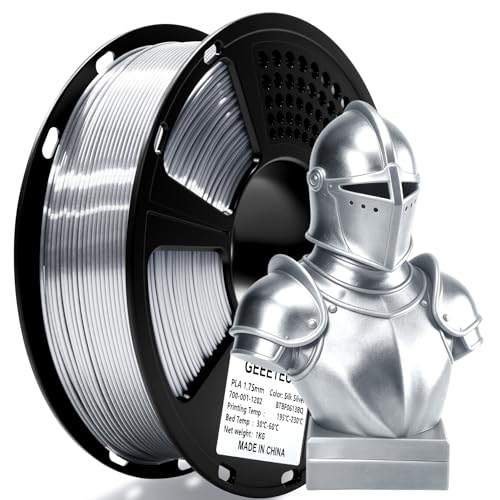
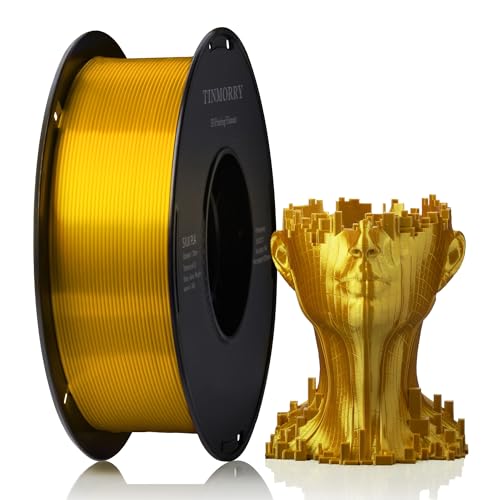
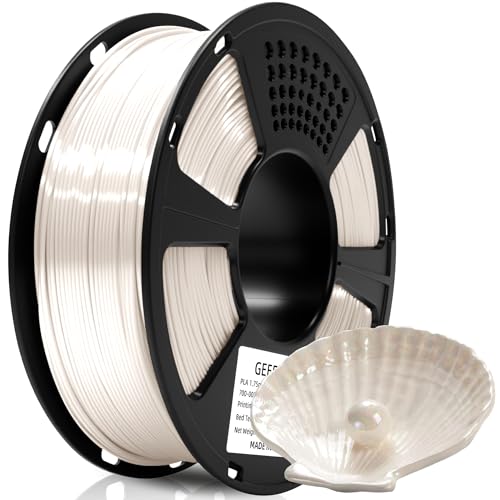
In-stock silk PLA spools with a price verified in the last 24 hours, spools with checked specifications first.

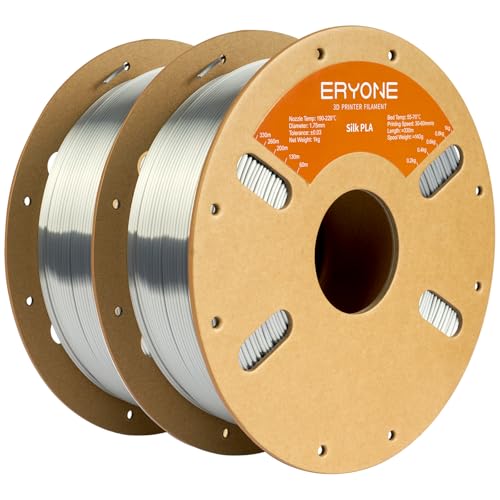


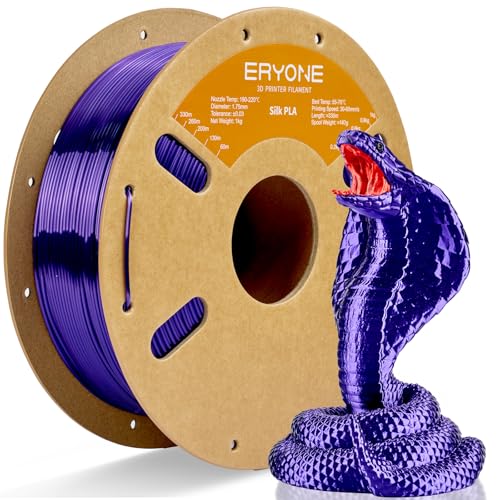


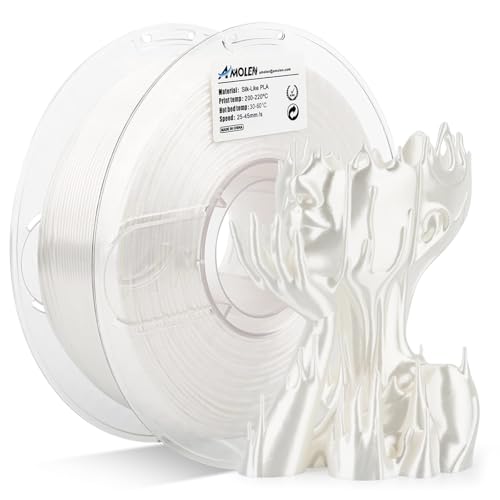


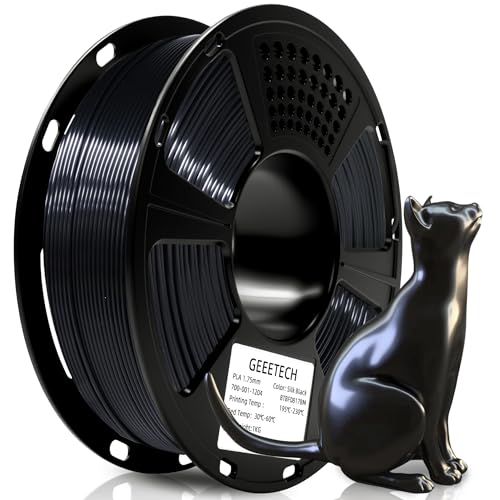



Comparison table
Related
Silk speed ratings are lower and spread wide
| Brand and line | Nozzle | Bed | Stated speed |
|---|---|---|---|
| AMOLEN PLA Silk Basic (opens in a new tab) | 210 to 240°C | 30 to 65°C | 200mm/s |
| ERYONE PLA Silk (opens in a new tab) | 190 to 220°C | 55 to 70°C | 60mm/s |
| Overture Silk PLA Gradient (opens in a new tab) | 200 to 220°C | 50 to 60°C | 30 to 70mm/s |
| Polymaker Panchroma Silk (opens in a new tab) | 190 to 230°C | 25 to 60°C | up to 250mm/s |
| SUNLU Silk PLA+ (opens in a new tab) | 210 to 230°C | 50 to 60°C | 200mm/s |
The gap between ERYONE's 60mm/s and Polymaker's 250mm/s is roughly fourfold. Within one brand, silk is usually the slower sibling: Polymaker rates Panchroma Silk at 250mm/s against 350mm/s for Panchroma Basic (opens in a new tab), and ERYONE rates its silk at 60mm/s against 100mm/s for ERYONE PLA (opens in a new tab).
Polymaker also gives a volumetric limit of up to 20mm³/s for Panchroma Silk. That figure is more useful than a speed on its own, because it holds whatever line width and layer height you choose.
Temperature bands tied to speed
SUNLU's Silk PLA+2.0 page is a good example of how silk settings depend on pace. It pairs 205 to 215°C with 50 to 100mm/s and 215 to 235°C with 100 to 200mm/s (opens in a new tab). In other words, the faster you print, the more heat the maker expects. If you raise speed in the slicer without raising the nozzle, the plastic has less time to melt fully and the sheen tends to suffer.
Where a maker gives only one range, start near the top of it for gloss and adjust downward if you see stringing or drooping overhangs.
Dual color and tri color silk
Multi-color silk spools put two or three colors into one strand, so a single print shows different colors depending on where you stand. AMOLEN describes its tri color line as triple-color coextrusion (opens in a new tab) with a color shift from different angles, rated below 180mm/s at 210 to 240°C with ±0.03mm tolerance. Polymaker's Panchroma Dual Silk (opens in a new tab) lists 190 to 230°C, up to 250mm/s and up to 20mm³/s, and says it works with AMS and other multi-material systems.
The catch with these spools is that the colors can swap sides partway through a print. Polymaker's color flipping guide (opens in a new tab) lists the causes: the strand rotating in loose drive gears, large speed differences between inner and outer walls, frequent speed changes, long AMS paths with extra bends, aggressive retraction and kinks on the spool. Its fixes are to set extruder tension just firm enough, keep wall speeds within 20% of each other, keep speeds in a narrow range and use an AMS only when needed.
What makes a silk spool a strong pick
- A stated speed you can actually use. On a slow bed slinger, a 60mm/s silk is fine. On a fast CoreXY printer, a spool rated at 200mm/s or more is far easier to live with.
- Temperature guidance linked to speed, as SUNLU publishes, or at least a clear single range.
- A flow figure when you print fast, such as Polymaker's 20mm³/s.
- For multi-color silk, a description of how colors are combined (coextruded, side by side) so you know whether to expect angle-dependent color or a change along the length. If it is a length gradient you want, see the rainbow PLA page.
- A clear net weight, since pla.deals divides each listing's price by the total net filament it contains to get price per kg.
Printer considerations
Fast printers need the slicer capped at the silk's rating. Creality rates the K1 to 600mm/s, so ERYONE's 60mm/s silk would run at a tenth of the machine's top speed; our Creality K1 page explains speed caps in more detail. In a multi-spool feeder, dual and tri color silk is the subtype most affected by long routing, per Polymaker's guide, so the external spool holder can be the better path for a showpiece. The AMS filament page covers reel fit.
Common mistakes with silk PLA
- Running silk at the printer's default speed. The result is often a duller surface than the product photos.
- Printing too cold. Silk usually wants the upper part of its range, especially as speed rises.
- Expecting silk to be as strong as standard PLA. Silk is chosen for looks; for load-bearing parts, a standard or PLA+ line is the more sensible pick.
- Mismatched wall speeds with dual color silk, which Polymaker identifies as a cause of colors flipping mid-print.
If you want the opposite finish, the matte PLA page covers lines that hide layer lines instead of highlighting them. The filament finder can narrow the catalog to silk.
Frequently asked questions
Why is silk PLA rated slower than regular PLA?
The additives that create the sheen change how the plastic melts and cools, and the gloss fades when it is pushed through too fast. Makers set lower speed ratings to protect the finish. Polymaker, for instance, rates its silk at 250mm/s and its basic line at 350mm/s.
What is the difference between dual color and tri color silk?
Dual color silk carries two colors in one strand and tri color carries three. Both show different colors depending on viewing angle. AMOLEN describes its tri color as coextruded.
Why did the colors on my dual color print swap sides?
Polymaker attributes this to the strand rotating on its way to the nozzle, from loose extruder tension, uneven wall speeds, frequent speed changes, long feeder paths or heavy retraction. Matching wall speeds and gentle handling are its main fixes.
Can I print silk PLA on a printer with a brass nozzle?
Yes. Silk is not a filled filament, and none of the silk makers in our research mention nozzle wear. Follow the maker's temperature and speed figures.
Product prices and availability are accurate as of the date/time indicated and are subject to change. Any price and availability information displayed on Amazon at the time of purchase will apply to the purchase of this product.