
Best Rainbow PLA Filament: Gradient Spools Compared
Last reviewed
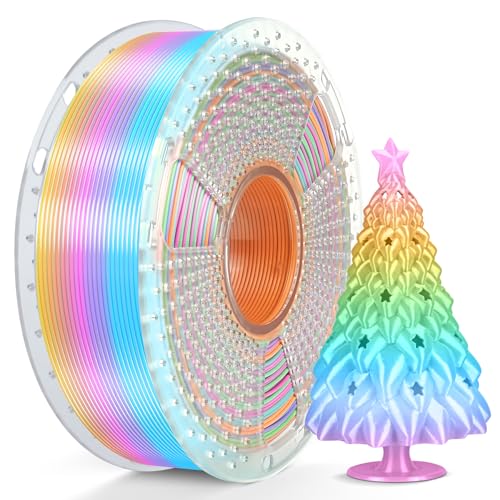
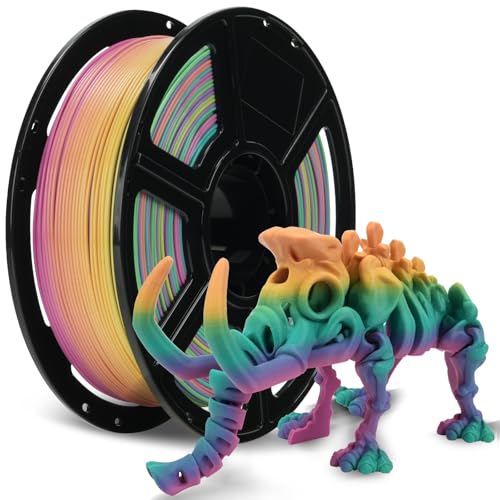
Rainbow PLA changes color along the length of the strand, so how much of the gradient you see depends on how many meters of filament a print uses compared with the color change length the maker states. A strong pick publishes that length plus its temperature and speed figures; compare them with the size of your models and your nozzle before choosing by price per kg.
18 spools have an in-stock price verified in the last 24 hours on this list.
Three different things sold as "rainbow"
Shopping for rainbow PLA turns up at least three distinct products, and they behave very differently on the printer.
- Length gradients. The color shifts gradually along the strand, so a tall print shows bands of color from bottom to top. This is what most people mean by rainbow or gradient PLA.
- Coextruded multi-color strands. Two or three colors run side by side in every centimeter of filament, so a print shows different colors from different angles rather than in bands. These are usually sold as dual or tri color silk and are covered on our silk PLA page.
- Light-dependent effects. Some filaments shift color with the light rather than along the strand. Polymaker says its Panchroma Starlight PLA changes color depending on the angle and intensity of light (opens in a new tab); it is not a gradient at all.
The rest of this page is about the first type.
Current picks with verified prices
In-stock rainbow and gradient PLA spools with a price verified in the last 24 hours, spools with checked specifications first.






Comparison table
Related
The color change length is a maker claim, and few state it
How a gradient looks on a finished print comes down to one number: how many meters of filament each color occupies before it shifts. A short cycle shows several colors on a small part. A long cycle may put an entire figurine in one shade.
Only some makers publish this figure, and when they do it is their claim, not something you can confirm before the spool arrives:
| Brand and line | Stated color change length | Other published figures |
|---|---|---|
| eSUN PLA-Silk Rainbow (opens in a new tab) | Color changes every 15 to 20 meters | 1kg, non-detachable spool |
| eSUN PLA-Luminous Rainbow (opens in a new tab) | Color changes every 15 to 20 meters | Glow pigment; hardened steel or ruby nozzle recommended |
| Overture Rainbow (opens in a new tab) (stated on the gradient page) | Full color cycle of approximately 60 meters | |
| Overture PLA Gradient (opens in a new tab) | Not stated | 190 to 220°C, bed 25 to 60°C, 40 to 70mm/s, ±0.02mm |
| AMOLEN PLA Silk Rainbow (opens in a new tab) | Not stated | 210 to 240°C, bed 30 to 65°C, under 200mm/s |
Note the difference between eSUN's and Overture's wording. eSUN describes how often the color changes; Overture describes the length of a complete cycle through all the colors. Those are not the same measurement, so do not compare 15 to 20 meters directly with 60 meters.
Matching the gradient to your model
You do not need to guess how much filament a model uses. Every major slicer reports filament use in meters after slicing. Compare that number with the maker's stated change length:
- Model uses much less than one color's length: expect one or two colors. Small figurines and keychains often land here.
- Model uses a few color lengths: expect a visible progression of bands, which is what most gradient photos show.
- Model uses more than a full cycle: the sequence repeats.
Where a maker states no length, the result on any one model is hard to predict, which is a reason to favor spools that publish one. Note also that a print started partway through a spool begins wherever the last print left off, so two identical prints from the same reel will rarely match.
Nozzles and glow rainbow
Glow-in-the-dark pigment is abrasive, and rainbow lines sometimes include it. eSUN states that its luminous rainbow filament may wear nozzles and extruder gears and recommends hardened steel or ruby nozzles. This site's compatibility notes mark glow PLA as not recommended on printers whose makers list fiber-reinforced filament as not recommended, such as the stainless-nozzle Bambu Lab A1, and on brass-nozzle machines with no hardened option, such as the Ender-3 V3 KE (opens in a new tab). Creality's K1 ships with a hardened steel nozzle (opens in a new tab). Standard and silk rainbow carry no such warning in the maker pages we checked.
What makes a rainbow spool a strong pick
- A stated color change length, with clear wording on whether it is per color or per full cycle.
- Published temperature and speed figures. Overture's gradient line is rated at 40 to 70mm/s, much slower than many standard PLAs, which matters on a fast printer.
- A clear note on abrasive pigments if the line glows.
- Spool details. eSUN warns that its silk rainbow spool is non-detachable, which matters if you planned to respool it for a feeder.
- Sample or multipack options if you want to see a gradient before committing to 1kg. AMOLEN sells a silk rainbow variety pack in four 200g spools; our multipack page covers bundles. pla.deals treats spools of 250g or less as samples, so those small reels never appear in its cheapest rankings, while price per kg for every listing is the price divided by its total net filament weight.
Printer considerations
In a multi-spool feeder, a gradient spool occupies one slot like any other, and the color simply shifts as it feeds; the AMS filament page covers reel fit. Because some gradient lines carry slow speed ratings, a fast CoreXY printer needs its profile capped to the maker's figure. On any machine, a wide, solid model uses more filament per layer than a slim one, so its color bands come out shorter in height.
Common mistakes with rainbow PLA
- Expecting a small print to show the whole rainbow. Check meters used against the stated length first.
- Comparing per-color and per-cycle lengths as if they were the same.
- Running glow rainbow through a brass or stainless nozzle that its printer maker does not rate for filled filament.
- Ignoring the speed rating. A gradient line rated at 70mm/s will not behave like a 300mm/s standard PLA.
The filament finder can filter to rainbow and gradient spools.
Frequently asked questions
How long is each color on a rainbow PLA spool?
It depends on the line, and only some makers say. eSUN states its silk and luminous rainbow lines change color every 15 to 20 meters. Overture's FAQ gives about 60 meters for a full cycle of its Rainbow filament. If a listing gives no figure, assume you cannot predict the bands on a given model.
Why did my rainbow print come out in one color?
The model probably used less filament than one color section. Your slicer's filament estimate in meters, compared with the maker's change length, tells you in advance.
Is rainbow PLA the same as dual color PLA?
No. Rainbow PLA changes color along its length. Dual and tri color PLA carry several colors side by side in the strand, so the color changes with viewing angle instead.
Does rainbow PLA need a hardened nozzle?
Only if it contains an abrasive additive. eSUN recommends hardened steel or ruby nozzles for its glow rainbow line. Its silk rainbow line carries no such recommendation.
Product prices and availability are accurate as of the date/time indicated and are subject to change. Any price and availability information displayed on Amazon at the time of purchase will apply to the purchase of this product.