
SUNLU PLA Filament: Five Lines Compared on Published Specs
Last reviewed
SUNLU publishes nozzle, bed and speed figures for all five of its core PLA lines, each with a stated tolerance of ±0.02mm on 1.75mm filament and a weight selector running from 0.25kg to 5kg. Plain PLA and PLA+ cover everyday printing, PLA Matte and Silk PLA+ are finish choices, and High Speed PLA is the line aimed at fast CoreXY machines.
Right now 110 SUNLU PLA listings have an in-stock price verified in the last 24 hours.
SUNLU official site (opens in a new tab)SUNLU support (opens in a new tab)
Who SUNLU is
SUNLU's own site describes the company as a maker of 3D printing consumables, naming filament, resins and filament dryers as its product areas. Its store navigation is split the same way: filaments, resins and accessories. For a PLA buyer the practical point is that SUNLU prints a settings table on each filament product page, so every line below has a nozzle range, a bed range and a speed ceiling you can check before buying. SUNLU also runs a filament wiki, and in a couple of places the wiki and the product page give different numbers; this page uses the product page figures and says where that matters.
Which SUNLU lines are worth a look, and for whom
- PLA is the general purpose line for prototypes, brackets and first prints on a new machine.
- PLA+ carries the plus label SUNLU uses for its modified formula. PLA+ recipes vary by brand, so read our PLA vs PLA+ guide before assuming it is tougher.
- PLA Matte is for parts where a low sheen hides layer lines, such as display models and enclosures.
- Silk PLA+ is the decorative pick for vases and figures that should catch the light.
- High Speed PLA is the line to look at if you own a K1 class CoreXY printer and want to run faster profiles.
Because every SUNLU page shows the same weight selector, from 250g up to 5kg, the brand is also a candidate for buyers who want one formula across a small test spool and a large reel. SUNLU uses that selector on all of its pages, so confirm that the color you want actually exists at the weight you want.
PLA
SUNLU's PLA product page (opens in a new tab) lists 1.75mm filament at ±0.02mm, a nozzle range of 200 to 240°C, a bed of 50 to 60°C and speeds up to 200mm/s. The wiki quotes a wider and lower nozzle window for the same material, so if your first layers look underextruded at the bottom of the product page range, the product page is the figure to start from and nudge upward.

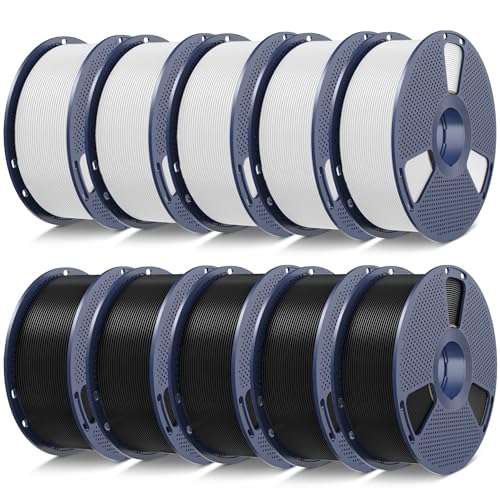


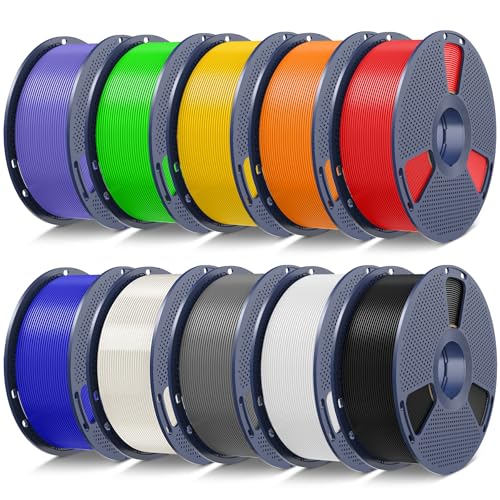
SUNLU PLA, Black White Grey Red Blue Green Yellow Orange Lavender Purple Clear
1.75mm · 1kg · 10 Pack
- Standard PLA
- 10 Pack
$122.73$129.19$12.27 per kg
Verified

PLA+
The PLA+ page (opens in a new tab) gives 205 to 245°C at the nozzle, 50 to 60°C at the bed, up to 200mm/s and the same ±0.02mm tolerance. The top of that range sits 5°C above plain PLA, which reflects the higher temperatures SUNLU pairs with its faster speed band.

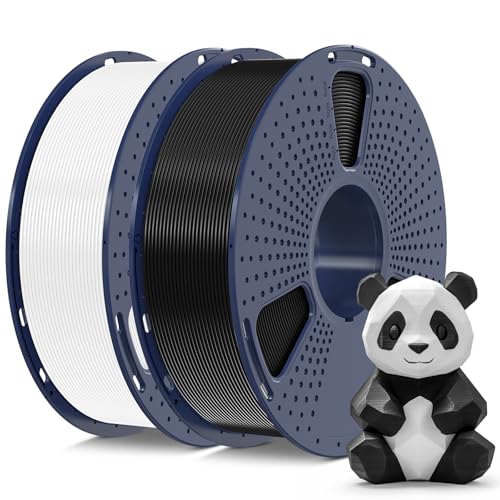
SUNLU PLA+, Black White Grey Transparent
1.75mm · 1kg · 4 Pack
- PLA+
- 4 Pack
$37.35$52.99$9.34 per kg
Verified




PLA Matte
On the PLA Matte page (opens in a new tab) SUNLU lists 205 to 245°C, a 50 to 60°C bed and a ceiling of 230mm/s, a little above the plain and plus lines. Matte surfaces scuff more easily than glossy ones, so this is a looks choice rather than a strength choice.

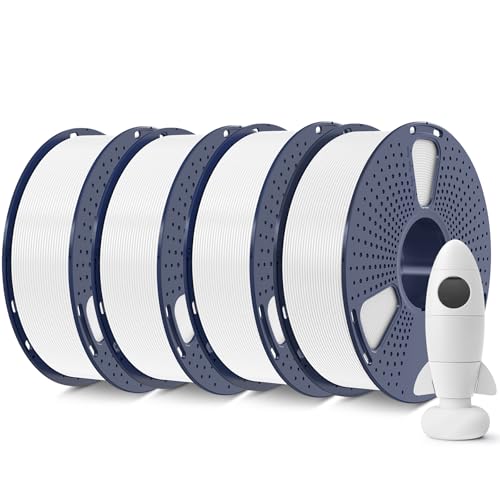
SUNLU PLA Matte, Black White Grey Olive Green Red Blue Pink Orange Purple Clay
1.75mm · 1kg · 10 Pack
- Matte PLA
- 10 Pack
$92.58$102.87$9.26 per kg
Verified


Silk PLA+
The Silk PLA+ page (opens in a new tab) keeps a narrower 210 to 230°C nozzle window, a 50 to 60°C bed and up to 200mm/s. SUNLU also sells a separate Silk PLA+ 2.0, which is not covered here; check the listing title so you know which formula the grid is showing.


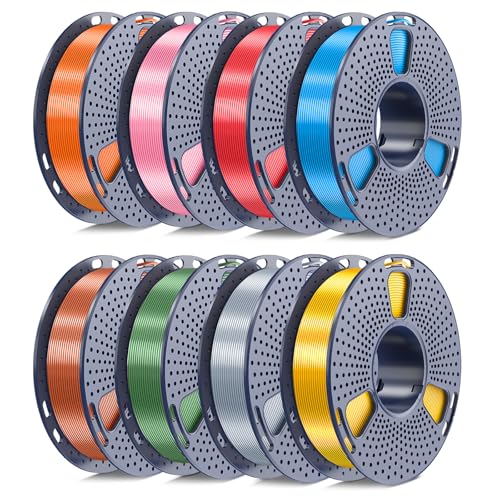
SUNLU Silk PLA+, Gold Silver Red Bronze Copper Blue Pink Orange
1.75mm · 250g · 8 Pack
- Silk PLA
- 8 Pack
- Sample
$49.99$25.00 per kg
Verified

SUNLU Silk PLA+, Red Gold Blue Green Red Purple
1.75mm · 250g · 4 Pack
- Silk PLA
- 4 Pack
- Sample
$29.99$29.99 per kg
Verified
High Speed PLA
SUNLU's High Speed PLA page (opens in a new tab) headlines speeds up to 600mm/s with a 210 to 230°C nozzle and a 50 to 60°C bed. The print settings table on that same page lists a much lower speed band than the headline, so treat 600mm/s as the upper limit of the formula, not a starting profile.

SUNLU High Speed PLA, Black White Red Orange
1.75mm · 4kg
- High-speed PLA
$39.42$41.50$9.86 per kg
Verified

SUNLU High Speed PLA, Black
1.75mm · 1kg · 4 Pack
- High-speed PLA
- 4 Pack
$39.70$41.79$9.93 per kg
Verified

SUNLU High Speed PLA, Orange Yellow Pink Green
1.75mm · 4kg
- High-speed PLA
$39.99$51.99$10.00 per kg
Verified
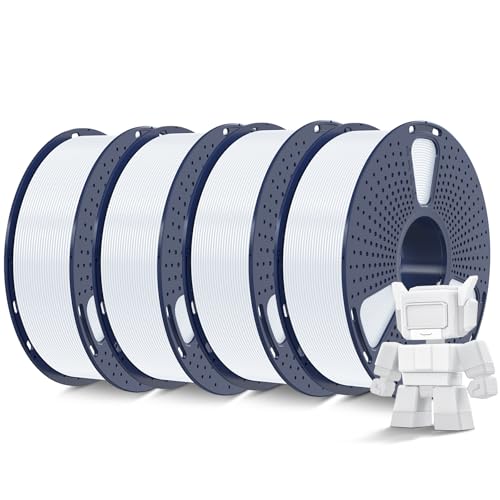
SUNLU High Speed PLA, White
1.75mm · 1kg · 4 Pack
- High-speed PLA
- 4 Pack
$42.99$51.99$10.75 per kg
Verified

SUNLU High Speed PLA, Black White Grey Pink Red Orange Yellow Green Blue Lavender Purple
1.75mm · 1kg · 10 Pack
- High-speed PLA
- 10 Pack
$120.02$126.34$12.00 per kg
Verified


SUNLU High Speed PLA, White Blue Red Yellow Pink Orange
1.75mm · 250g · 8 Pack
- High-speed PLA
- 8 Pack
- Sample
$49.99$25.00 per kg
Verified
How the five lines differ
| Line | Nozzle | Bed | Stated max speed |
|---|---|---|---|
| PLA | 200 to 240°C | 50 to 60°C | 200mm/s |
| PLA+ | 205 to 245°C | 50 to 60°C | 200mm/s |
| PLA Matte | 205 to 245°C | 50 to 60°C | 230mm/s |
| Silk PLA+ | 210 to 230°C | 50 to 60°C | 200mm/s |
| High Speed PLA | 210 to 230°C | 50 to 60°C | 600mm/s |
The bed figure never changes, so one build plate setting works across the range. The real split is speed: four lines top out between 200 and 230mm/s, while High Speed PLA is the only one rated beyond that. Silk and High Speed share the narrowest nozzle window, which leaves less room for error if your hotend reads a few degrees off.
Since the same line comes in several weights, compare on price per kg rather than sticker price. pla.deals divides the offer price by the total net filament in the listing and treats spools of 250g or less as samples, which never appear in cheapest lists. Large reels are covered on our 5kg PLA page.
Competing brands to compare
- eSUN has a similar spread of plus, matte, silk and high speed PLA, and publishes a ±0.03mm tolerance and a 350mm/s ceiling for its PLA+.
- JAYO sells 1.1kg rolls and rates its PLA to 80mm/s, so it suits slower bed slingers better than fast CoreXY machines.
- ELEGOO states the same ±0.02mm tolerance and uses cardboard spools, but publishes fewer temperature figures.
Printer fit for SUNLU PLA
Our compatibility data, built only from manufacturer specs, reads as follows. All five lines come out compatible on manufacturer specs with the Bambu Lab A1, A1 mini, P1S and H2D and the Creality Ender 3 V3, V3 KE and V3 SE, because each maker lists PLA, diameters match and SUNLU's nozzle range sits inside the printer's limit. On the Creality K1, K1 Max and K1C, PLA, PLA+, PLA Matte and Silk PLA+ are compatible with one condition: cap the slicer at SUNLU's stated speed rather than the K1's 600mm/s maximum. High Speed PLA needs no cap on those printers, and our K1 PLA page goes deeper. The P1P and X1 Carbon stay not verified, because the Bambu pages we could read do not confirm a full spec set for them.
SUNLU's pages do not describe the spool itself, so for an AMS check the reel against the limits on our AMS PLA page before loading it.
Frequently asked questions
Is SUNLU PLA+ hotter to print than SUNLU PLA?
Slightly. SUNLU lists 205 to 245°C for PLA+ against 200 to 240°C for PLA, with the same 50 to 60°C bed.
Which SUNLU line should go in a Creality K1?
High Speed PLA is the only SUNLU line rated beyond 230mm/s. The other four work on manufacturer specs if you cap the speed at SUNLU's figure.
Why does the wiki show different temperatures from the product page?
SUNLU's wiki and product pages are maintained separately and disagree for PLA and PLA Matte. We use the product page values and suggest starting from those.
Does SUNLU sell PLA in sizes above 1kg?
Its product pages offer a weight selector up to 5kg. Availability varies by color, so check the live grid for the exact pairing you need.
More SUNLU offers




Product prices and availability are accurate as of the date/time indicated and are subject to change. Any price and availability information displayed on Amazon at the time of purchase will apply to the purchase of this product.