
ELEGOO Rapid PLA Plus, Black
1.75mm · 1kg · 4 Pack
- High-speed PLA
- 4 Pack
$38.66$42.96$9.66 per kg
Verified
Last reviewed
High-speed PLA is PLA its maker formulates and rates for faster printing, with stated maximums of 500 to 600mm/s on several lines, but those figures only hold if your printer's hot end can melt that much plastic. A strong pick states its speed rating, a temperature range (ideally tied to speed) and, where possible, a volumetric flow figure, so compare those with your printer before choosing by price per kg.
97 spools have an in-stock price verified in the last 24 hours on this list.
Fast CoreXY printers move the toolhead far quicker than older machines, and the limit is often no longer the motors but how fast the hot end can melt plastic. High-speed PLA is formulated to flow and solidify more readily at those rates. Creality describes high-speed PLA in general as formulated for higher melt flow and faster cooling (opens in a new tab), and adds that it can run much faster than conventional PLA if the hot end can supply enough flow. That condition is the key to reading every claim on this page.
In-stock high-speed PLA spools with a price verified in the last 24 hours, spools with checked specifications first.
1.75mm · 1kg · 4 Pack
$38.66$42.96$9.66 per kg
Verified

1.75mm · 4kg
$39.42$41.50$9.86 per kg
Verified

1.75mm · 1kg · 4 Pack
$39.70$41.79$9.93 per kg
Verified

1.75mm · 4kg
$39.99$51.99$10.00 per kg
Verified
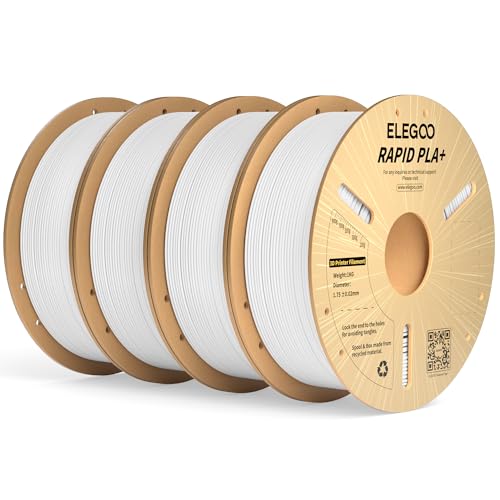
1.75mm · 1kg · 4 Pack
$40.46$44.96$10.12 per kg
Verified
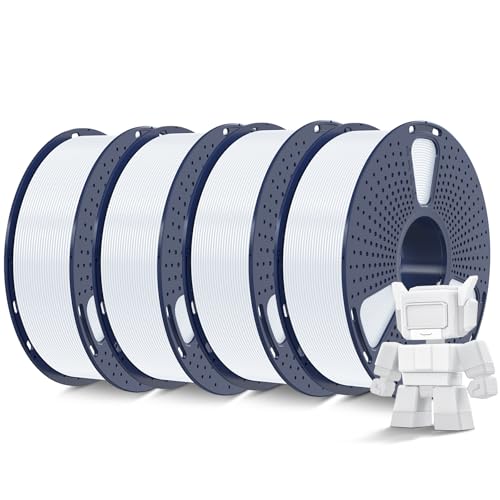
1.75mm · 1kg · 4 Pack
$42.99$51.99$10.75 per kg
Verified

1.75mm · 1kg · 2 Pack
$22.48$24.98$11.24 per kg
Verified

1.75mm · 1kg · 10 Pack
$120.02$126.34$12.00 per kg
Verified
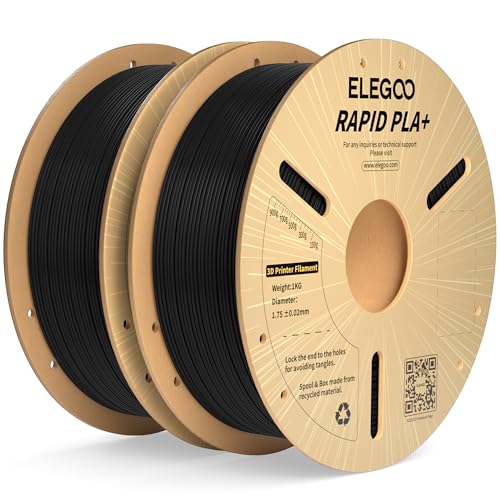
1.75mm · 1kg · 2 Pack
$24.28$26.98$12.14 per kg
Verified

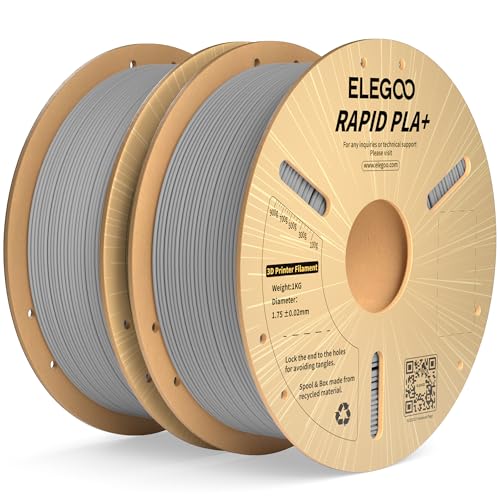
1.75mm · 1kg · 2 Pack
$25.18$27.98$12.59 per kg
Verified


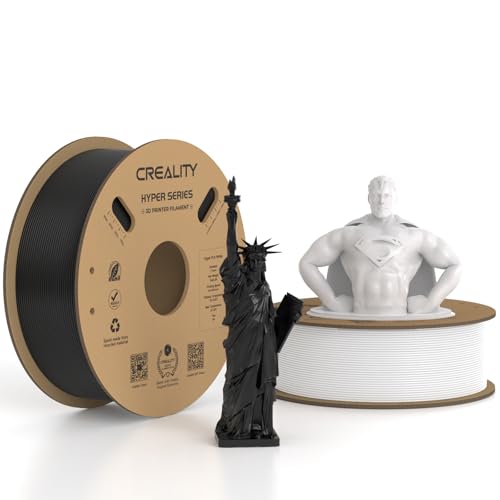


1.75mm · 1kg · 2 Pack
$35.99$49.99$18.00 per kg
Verified
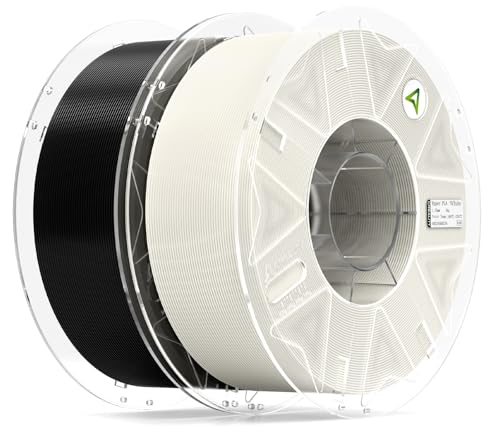

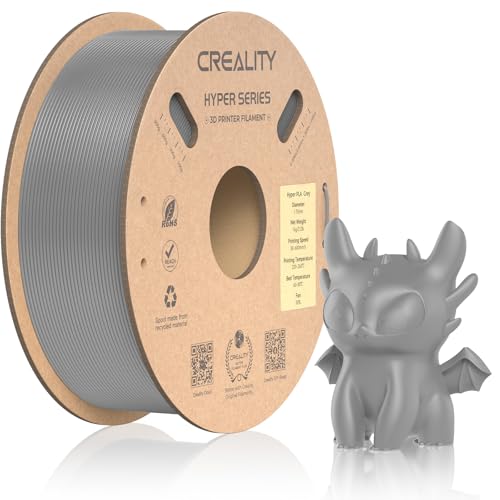


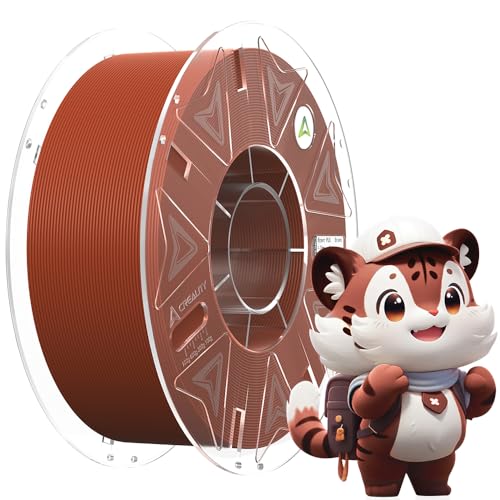

| Spool | Type | Net weight | Per kg | Price |
|---|---|---|---|---|
| ELEGOO Rapid PLA Plus, Black | High-speed PLA | 4kg (4 spools) | $9.66/kg | $38.66 |
| SUNLU High Speed PLA, Black White Red Orange | High-speed PLA | 4kg | $9.86/kg | $39.42 |
| SUNLU High Speed PLA, Black | High-speed PLA | 4kg (4 spools) | $9.93/kg | $39.70 |
| SUNLU High Speed PLA, Orange Yellow Pink Green | High-speed PLA | 4kg | $10.00/kg | $39.99 |
| ELEGOO Rapid PLA Plus, White | High-speed PLA | 4kg (4 spools) | $10.12/kg | $40.46 |
| SUNLU High Speed PLA, White | High-speed PLA | 4kg (4 spools) | $10.75/kg | $42.99 |
| ELEGOO Rapid PLA Plus, Black White | High-speed PLA | 2kg (2 spools) | $11.24/kg | $22.48 |
| SUNLU High Speed PLA, Black White Grey Pink Red Orange Yellow Green Blue Lavender Purple | High-speed PLA | 10kg (10 spools) | $12.00/kg | $120.02 |
| ELEGOO Rapid PLA Plus, Black | High-speed PLA | 2kg (2 spools) | $12.14/kg | $24.28 |
| ELEGOO Rapid PLA Plus, Black | High-speed PLA | 1kg | $12.59/kg | $12.59 |
| ELEGOO Rapid PLA Plus, Gray | High-speed PLA | 2kg (2 spools) | $12.59/kg | $25.18 |
| SUNLU High Speed PLA, Black | High-speed PLA | 1kg | $13.70/kg | $13.70 |
| Anycubic PLA High Speed, Pearl Black | High-speed PLA | 1kg | $14.99/kg | $14.99 |
| Creality Hyper PLA, Black | High-speed PLA | 4kg (4 spools) | $15.79/kg | $63.16 |
| Creality Hyper PLA, Black White | High-speed PLA | 2kg (2 spools) | $17.00/kg | $33.99 |
| Creality Hyper PLA, Black | High-speed PLA | 4kg | $17.45/kg | $69.79 |
| Creality Hyper PLA, Rfid Black White | High-speed PLA | 2kg (2 spools) | $18.00/kg | $35.99 |
| Creality Hyper PLA, Black | High-speed PLA | 2kg | $20.00/kg | $39.99 |
| Creality Hyper PLA, Black | High-speed PLA | 2kg (2 spools) | $22.40/kg | $44.79 |
| Creality Hyper PLA, Grey | High-speed PLA | 1kg | $22.99/kg | $22.99 |
| Creality Hyper PLA, White | High-speed PLA | 1kg | $22.99/kg | $22.99 |
| Creality Hyper PLA, Black | High-speed PLA | 1kg | $23.99/kg | $23.99 |
| Creality Hyper PLA, Brown | High-speed PLA | 1kg | $23.99/kg | $23.99 |
| Creality Hyper PLA, Gray | High-speed PLA | 1kg | $23.99/kg | $23.99 |
| Brand and line | Stated max speed | Nozzle | Tolerance |
|---|---|---|---|
| Anycubic PLA High Speed (opens in a new tab) | 600mm/s (500mm/s elsewhere on the same page) | 190 to 260°C | ±0.02mm |
| Creality Hyper PLA (opens in a new tab) | 600mm/s | 190 to 230°C | ±0.03mm |
| ELEGOO Rapid PLA Plus (opens in a new tab) | 600mm/s | ±0.02mm | |
| eSUN PLA+HS (opens in a new tab) | 500mm/s | ±0.03mm | |
| eSUN PLA-HS (opens in a new tab) | 250mm/s | ||
| SUNLU High Speed PLA (opens in a new tab) | 600mm/s | 210 to 230°C | ±0.02mm |
A maximum is a ceiling, not a recommendation. eSUN, for example, pairs its 500mm/s top figure with a normal printing speed of 50 to 300mm/s. ELEGOO cites 250mm/s as a speed its Rapid PLA Plus holds up at on its own Neptune 4 series printers. Anycubic's page gives both 500mm/s and 600mm/s in different sections; when a page disagrees with itself, plan around the lower number.
A speed figure only makes sense alongside a line width and layer height. Volumetric flow, in cubic millimeters per second, folds those together: layer height times line width times speed. At a 0.2mm layer and a 0.45mm line, 300mm/s works out to 27mm³/s; at a 0.3mm layer, the same speed needs 40.5mm³/s. Two people quoting "300mm/s" can be asking very different things of their hot ends.
Few makers publish flow, which makes the ones that do worth noting:
Note the conditions attached to Polymaker's figure. A flow number measured on a high-flow hot end does not transfer one to one to a standard hot end; it tells you what the plastic can do, while your printer decides how much of it you get.
Anycubic publishes the clearest link between heat and pace for PLA High Speed: 190 to 210°C for 50 to 150mm/s, 210 to 230°C for 150 to 300mm/s and 230 to 260°C for 300 to 600mm/s. Creality's Hyper PLA guidance says to raise the temperature for high flow or weak layer bonding. The pattern is the same: plastic spends less time in the melt zone at speed, so it needs more heat to be fully molten when it leaves the nozzle. Our print temperature guide shows how to step the nozzle up in small increments.
Match the filament to the machine's real throughput. Creality rates the K1 (opens in a new tab) and Anycubic rates the Kobra 3 (opens in a new tab) to 600mm/s, so a 600mm/s spool is aligned with those machines' headline figures. The Ender-3 V3 SE (opens in a new tab) is rated to 250mm/s with a 260°C nozzle limit; high-speed PLA still prints on it, but you will not use the speed you paid for, and Anycubic's 230 to 260°C top band sits right at that printer's ceiling. Our printer pages for the Creality K1 and Bambu Lab A1 cover filament matching for those machines, and the printer finder lists stated speeds across the catalog.
Yes. It is still PLA and prints at normal speeds. Anycubic, for example, says its high-speed PLA is compatible with both high-speed and standard printers, and gives a 190 to 210°C band for 50 to 150mm/s.
It is volumetric flow: how much plastic per second the filament can be melted and pushed at. It equals layer height times line width times speed, so it compares fairly across different slicer settings.
Marketing copy and spec tables are sometimes written separately. Anycubic's high-speed PLA page lists both 500mm/s and 600mm/s. Use the lower number as your planning figure.
Speed ratings say nothing about strength. If you need tougher parts, look for mechanical data on the specific line, or consider a PLA+ whose maker describes improved impact resistance.
Product prices and availability are accurate as of the date/time indicated and are subject to change. Any price and availability information displayed on Amazon at the time of purchase will apply to the purchase of this product.